

Single Helm install
Server, agent, web UI, postgres-dev, runner profiles — all wired via one chart. Auth, retention, log archive, plugin catalog all surface as values.yaml knobs.
gocdnext is a CI/CD orchestrator that takes the parts of GoCD, Drone, Woodpecker and GitHub Actions that worked, drops the parts that didn’t, and puts them in one binary. Pipelines live in .gocdnext/ next to your code. Webhooks turn pushes into runs. Plugins are containers with a tiny manifest. Logs are partitioned and archivable. The control plane and the runner agent each ship as a single Go binary.
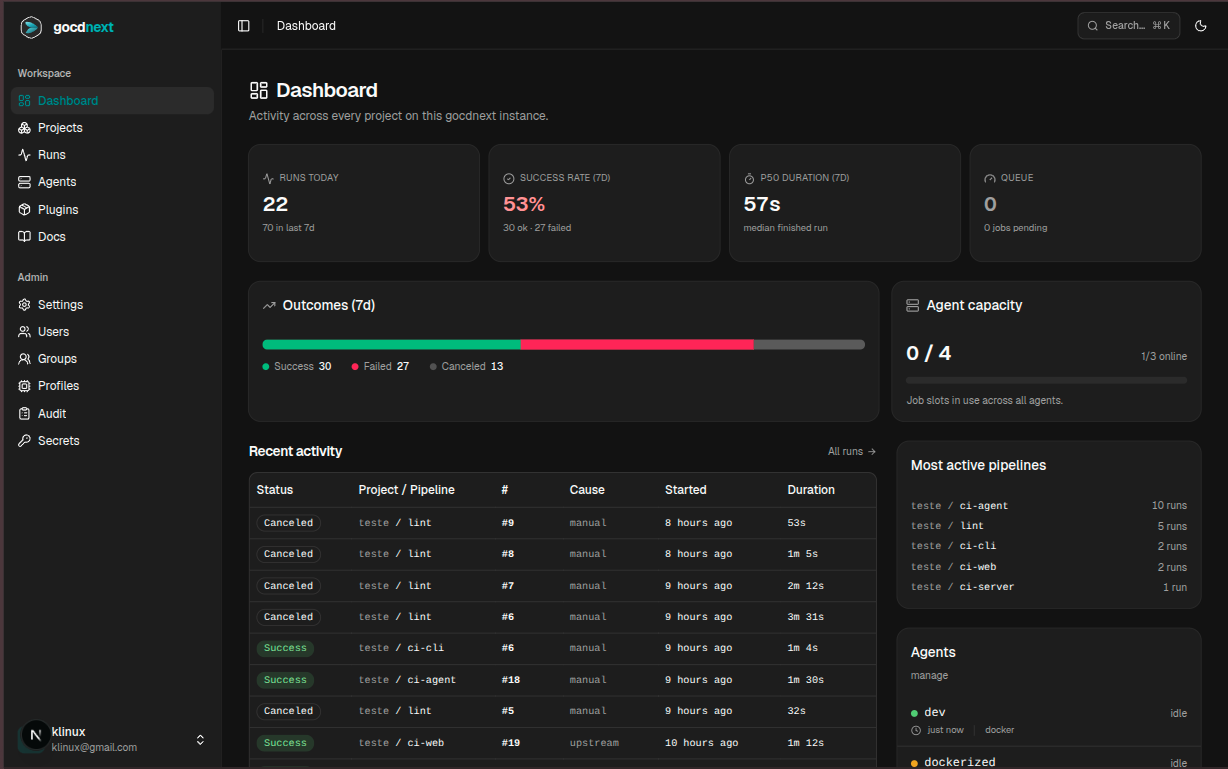
Single Helm install
Server, agent, web UI, postgres-dev, runner profiles — all wired via one chart. Auth, retention, log archive, plugin catalog all surface as values.yaml knobs.
Pipelines as code
.gocdnext/<name>.yaml per pipeline. Webhook-on-push creates a
run, fanout from materials.upstream chains pipelines, manual
triggers are one click.
Plugins are containers
uses: ghcr.io/klinux/gocdnext-plugin-go@v1 is a thin shim image. The official catalog
ships 39+ plugins; your own land in extraPlugins: of values.yaml
— no PR required.
Anti-Woodpecker logs
log_lines is RANGE-partitioned by month, batched bulk-inserted,
and (opt-in) cold-archived to S3/GCS so the database stays lean
even at hundreds of jobs/hour.
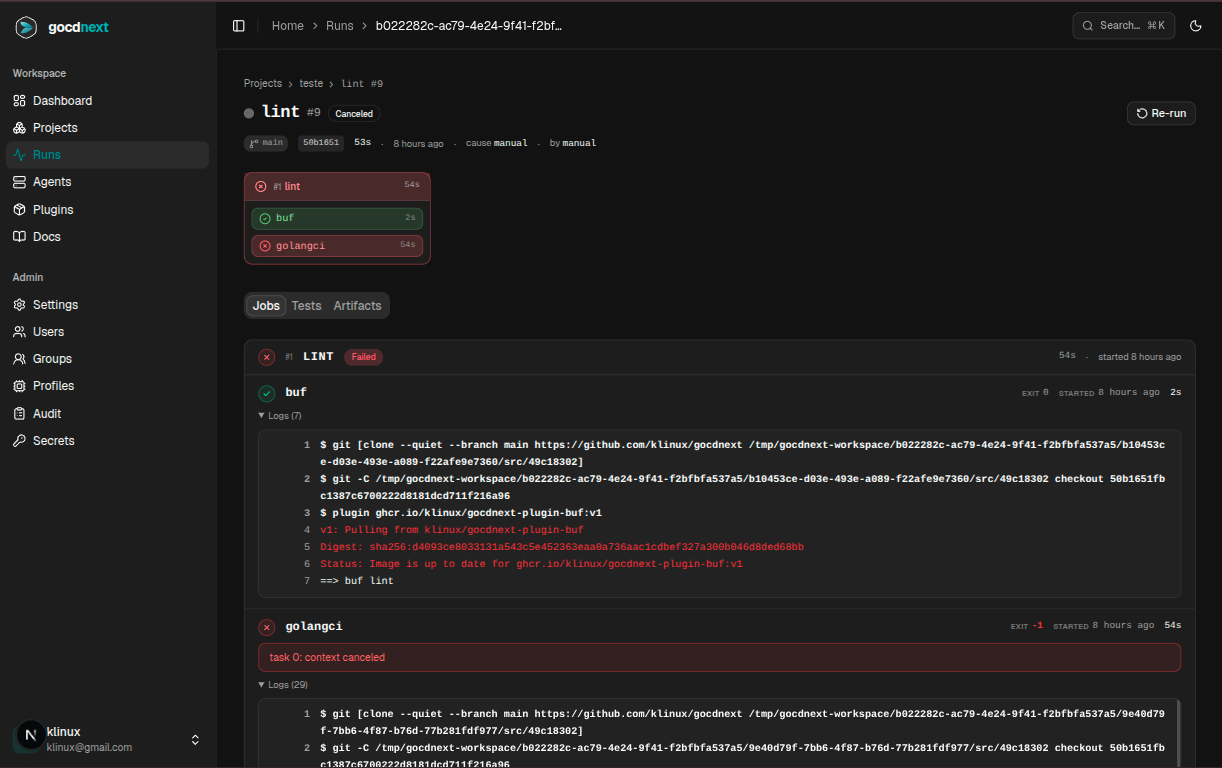 Run detail — Jobs / Tests / Artifacts tabs with the log stream live via SSE.
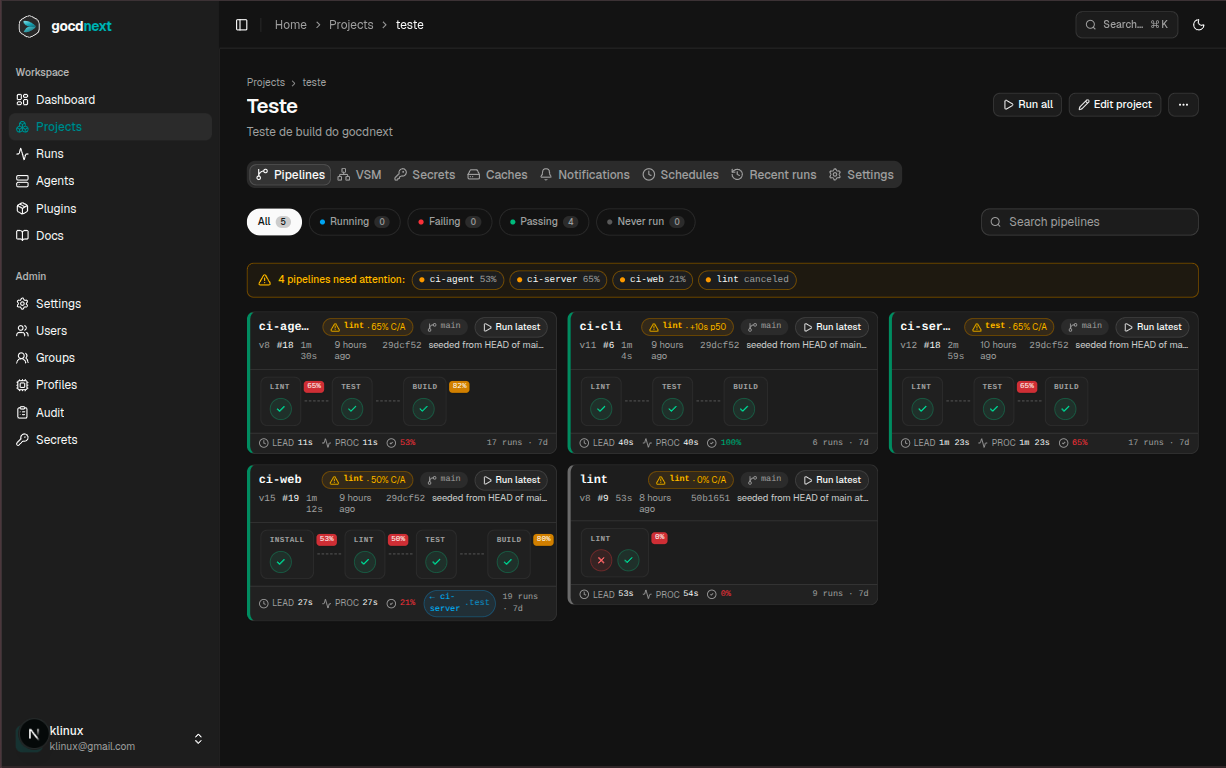
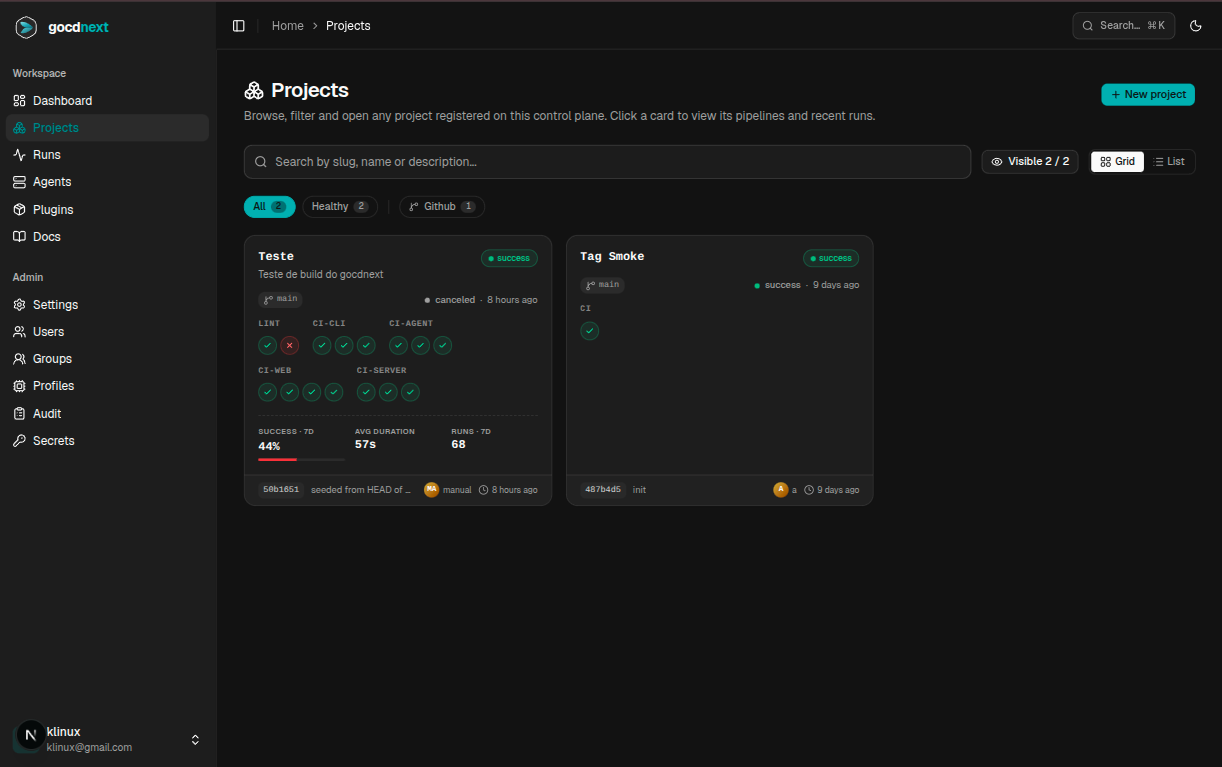 Project page — pipelines as cards, status-tinted left border, bottleneck pill, mini stage strip.
 VSM — the graph of pipelines + materials, exactly the GoCD primitive.
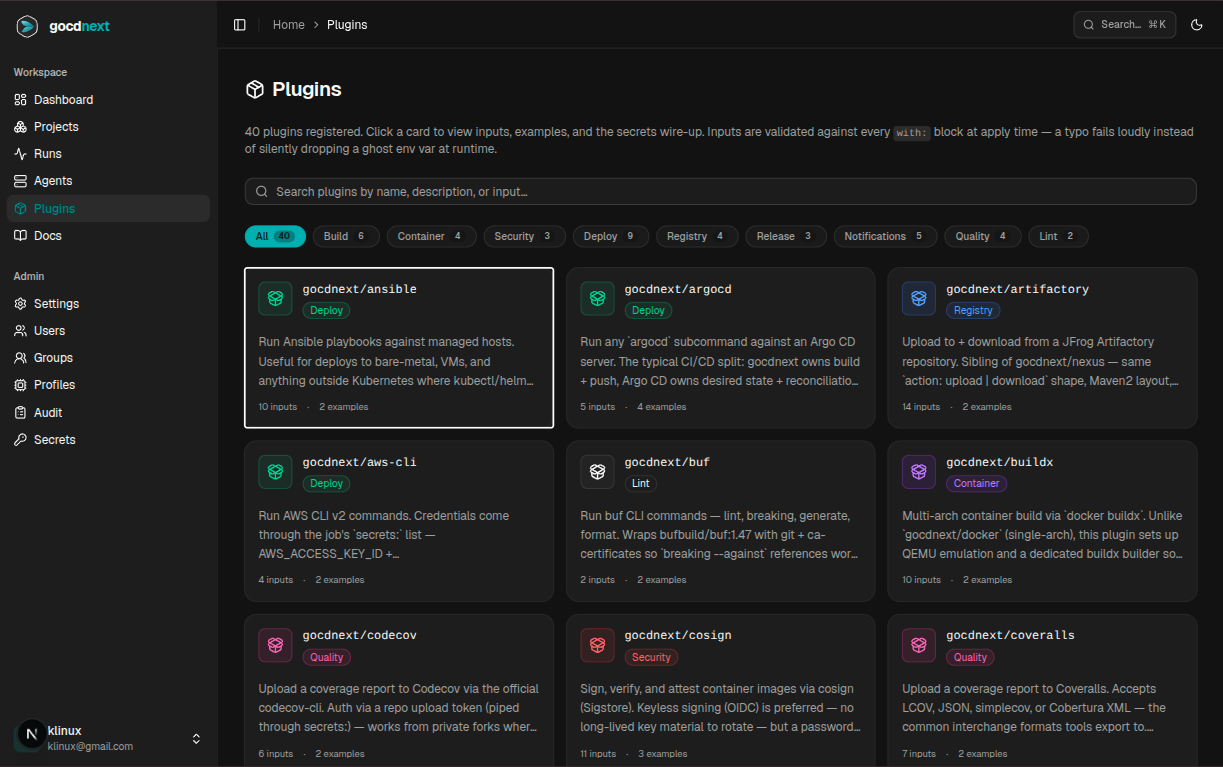 Plugin catalog — auto-generated from each plugin’s
 plugin.yaml manifest.
make dev.plugin.yaml manifests the server validates
with: against, so what you read here matches what runs.